June 29, 2011

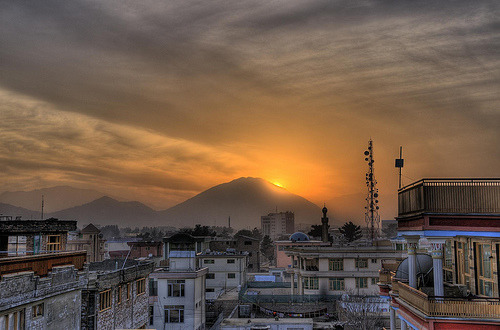
With my eyes fixed on Kabul


*Posted 6/29/11, Edited and Re-posted 6/30/11


As I prepare to relocate to Kabul in the coming months, watching the chaos at the Intercontinental Hotel yesterday made me physically ill.  Simultaneously I felt angry and frustrated.  Part of me was questioning the resolve to go to Kabul and the other part of me felt only more determined to get there.  I don't go looking for fires in the world as much as I look for ways to extinguish them, and watching the tragedy unfold, I felt as if the fire just got a great deal bigger.

It is for the very fact that I want to see a world of peace and justice, where no one must suffer needlessly, that I support any institution- be it nations, armies, corporations, or otherwise - who dedicate their resources to bring education, capital, and legal systems into the corners of the world.  Terrorism and aggression byproducts of global injustice, a consequence of international systems having marginalized vast regions of the globe, creating pockets of chaos, poverty, and despair.  As long as the world contains vast populations of alienated, frustrated youth who are denied a better future due to illiteracy, misinformation, and extreme poverty, tragedy will continue to touch our lives.  

Perhaps the avoidance of such ungoverned spaces would have been excusable in the past, but in a global era, the chaos of these regions will continue to permeate into the world.  Avoided regions such as Somalia affect the world everyday, evident by the 8.3 Billion Dollars lost to piracy in 2010, a metric that does not reflect the loss of innocent life or the displacement of millions of people.  Without continued effort to stabilize and facilitate an educated peace, will  today's Afghanistan, Yemen, Pakistan or elsewhere be any different?  

We can choose to intervene and invest in the well-being of humanity, to spread education, improved housing, access to clean water and opportunities for social mobility, or we can continue to marginalize populations.  The construction of economic barriers will not solve problems by removing them from sight.  In contrast, it will only give reason for people climb them, and when that is not possible because the wall has grown too high, it is only too be expected that those on the other side will fight to break the wall down.

I am saddened to see the lost of life from yesterday's attacks, and naturally fearful when I look at the problems facing me down the road.  Such incidents shock the conscious and shake me at the core.  My job is not to solve such problems, to "save the world" or bring peace and justice.  My job is to supply straight forward solutions to complex problems, very much in the way that a mechanic fixes a car or a technician repairs a computer.  The only difference is that I have to work with communities.  It is unfortunate that solving these problems - such as providing education and technical training to expand economic markets and reduce poverty - must confront hostility by an isolated and active minority.  Yet it is more unfortunate that so few are contributing solutions. 

It is understandable that not everyone has the ability to directly contribute to solving such problems.  Yet everyone has an ability to contribute in some particular fashion.  One place to start is with a modest donation to an aid agency.  I suggest MSF, as they take on  the greatest humanitarian challenges in the world and do not have any political support, operating entirely by private donations. More importantly, they are arguably the one of the best agencies, and are a leader in their field. Click Here to Make a Donation Online.  For now, I will  continue to measure the conditions in which I need to work in the future, and will continue to calculate the ratio of risk I am willing to confront for a each particular job.  While I continue to determine the fine balance of personal ability vs personal risk, I hope that others can at least make a small contribution to support those who do the same, and often in far more dangerous circumstances.

June 26, 2011

Reading #Conflict in the Urban Terrain of Kismayo, #Somalia


Recent reports from Somalia have described a helicopter attack on al-Shabaab fighters near Kismayo.  Originally reporting the death of two fighters, it now appears that 15 died in the missile attack.  Kismayo is an al-Shabaab stronghold where a great deal of fighting has taken place. 

A quick look at the city on Google Images reveals a large section of the city blackened by explosions and fires.  The pattern of scorched buildings is consistent with the major transportation corridors highlighted in red. As the conflict in Somalia is highly mobile and fast moving, gains are established by taking hold of the roadways, thereby assuming control of the neighborhoods pinned between roads.

If one isolates the individual locations of attack, a subtle collection of patterns emerge.  The largest areas of combat often take place at transportation intersections.  This provides  the largest variety of logistical and operational  input/outputs, such as improved range of vision and horizontal expansion of battle space.

Yet further analysis also reveals two primary bands of conflict.  Both bands are curvilenear, suggesting 2-3 primary points of entry for troops.  The band on the left, situated on city limits, shows on large point of conflict followed by a series of smaller points.  Either the conflict began at a fever pitch and tapered off, or it built to a climax in the first band.

As the conflict continued and forces swept into the city, the second band emerged. They traveled most likely from the lower corridor which contains clear horizontal roadways and is less entangled in the labyrinth of smaller, internal side-streets.  Al Shabaab would have likely traveled northward, continuing to take advantage of major transportation arteries and as the land came under their control, the intensity of conflict would subside.

June 21, 2011

#Kabul, #Afghanistan: #Skateboarding toward the future


More often than not, international development is pursued as a purely economic process.  Roads must be built, banks must be strengthened, housing improved, and health care should be made accessible.  Yet the simple construction of institutions, the provision of infrastructure, and the implementation of social programming is not enough to solve all social problems because social problems are complex. It is common wisdom that these complex problems can only be solved internally, within the community,  yet the community generally lacks the means to to action.  Conversely, aid agencies frequently advertise for specialists in "capacity building" and yet within the job descriptions, the term "capacity" remains consistently vague.   While capacity is best defined as an internal ability to pursue and implement active change, when the workings of communities are merged with capacity, the concept bubble stretches to a breaking point.  The scale of the problem remains too much for the solution.  Sometimes something else is needed, a strategy that is less direct than teaching job skills or creating new markets.

While in Cairo, I witnessed the transformative power  of that simple social programming can have within the lives of youth who must grow up in poverty and who lack opportunities for personal advancement.  Viable social programming, such as sports, music, or even the provision of a space to play, can transform a child's life.  Certainly these things alone cannot remove the frustrations of poverty or the pains of social alienation, nor can these things provide the same concrete tools for personal advancement as education and job training.  Yet these sorts of programs create opportunities for confidence and self esteem, provide opportunities to for children to communicate and express themselves.  Self expression is easily undervalued because its role is immeasurable, but little imagination is necessary to recognize that a confident child will find more success in life than one who is alienated and unhappy.  Even where opportunities are limited, those with confidence and pride will creatively seek solutions, believing that solutions are possible.

This evening I discovered the brief documentary Skateistan: To Live and Skate Kabul.  This film shows the work of an ngo to bring skate boarding to youth in Kabul.  It shows how a nice space for play, how basic access to safety and fun may wield a transformative power.   The film reveals how something as simple as skateboarding can dramatic shape an individual's life.  Now imagine, if a child impacted by something as simple as skateboard had the chance to go to school, to drink clean water, and to walk down the street without fear.  Apply the same concept to hundreds, perhaps thousands, of children in a city like Kabul and the concept of capacity becomes strikingly clear.  Suddenly the future isn't so bleak.

Kenya's Superhighway


super-highway through Kenya is under construction, complimented by the development of a new trucking industry and ocean port.  Chinese investment in the region is spurring such projects, leading the construction of the Thika Road. By expanding an existing route, this development will connect Kenya's local economy with the surrounding region, ease traffic, and facilitate the movement of roughly 80 million people.

The road construction includes the expansion of existing roadways to interconnect the new project with preexisting infrastructure, improving access to universities, cinemas, and the national museum.   It also includes flyovers, underpasses, and a full drainage assemblage. Construction hasn't been entirely smooth, as tensions over hiring processes have led to large scale protests. Many land owners were also dissatisfied to lose their land to the project. The project will take three years and three construction companies to complete the project, but will have large scale impact on the regional economy.

Economist Jeffrey Sachs once stated that one of the greatest projects our world could pursue to overcome poverty is to build an efficient transportation route throughout East Africa, "rather than a two-lane, broken-down road," that presently serves as the only transit corridor from Mombasa to Burundi.  Perhaps the Thika Road expansion is will lead to other such projects, and Sachs' vision will become a reality.

June 20, 2011

Reporting the Frontline of Conflict in Mogadishu

A lighthouse in Mogadishu destroyed by war. National Geographic.
After monitoring the conflict in Somalia for several years, I can attest to the limited flow of information from the region.  Insufficient information results in insufficient analysis and Somalia is subject to the worst circumstance of all - insufficient concern.  While the conflict rages with global implications, the lack of journalism and knowledge on the region precipitates a disproportionate lack of conviction to intervene and assist. 


Today I found a video briefly covering the frontline of the conflict in Mogadishu.  It is not often that one has the opportunity to watch video footage of the central conflict in Somalia.  It is not possible to embed the flash video from the BBC's website, so it is necessary to use the following link [Somalia].  Given the subject matter, I thought I would share with readers some of the other common media sources on Somalia.


New York Times resource page on Somali [LINK]
The NYT page is frequently updated with AP stories and independent NYT journalism, however the technical references such as their 'Experts' section is strongly outdated.  


IRIN Humanitarian News Somalia Page [LINK]
The IRIN site is a major source for news on the region, and is comprehensively connected to other UN-related organizations such as OCHA, so it tends to have a focus on development and displacement issues.  I do wish more maps were available in addition to technical data, yet I do appreciate the constant updates.


Hiiraan Online [Somalia News Site]
This Somali news source is frequently updated and closest to the source, but also is difficult to navigate and not easy to understand.  Sometimes the journalism is also not of a very high standard, the news is provided at a variety of scale - with pieces focusing on anything between specific urban issues and broader concerns within the Somali Diaspora.  Much of it is written in Soomaali language, but there is enough work in English to maintain its value.


Somalia Report [LINK]
I just recently discovered this site and I absolutely love it.  It only hires local journalists and constantly provides thorough updates on recent events concerning piracy, militant groups, and political leaders.  They also provide an email subscription service.

Urban Planning in Conflict

Kabul, Afghanistan

I haven't updated this blog for awhile, although daily updates can be found at The Humanitarian Terrain.  The next couple months will continue to have a low rate of posts, however in August I will have far more to write about as I begin my new position in Kabul, Afghanistan.  For the present are some small news blurbs concerning urban development issues in regions of interest.

UNHABIT releases Charter of Values [LINK].  In line with contemporary trends in economic and physical planning, UNHABITAT has required ongoing partnerships with private agencies to facilitate project implementation.  To encourage a strengthened relationship that remains centered on UNHABITAT priorities within the private sector, the agency as created a series of guidelines to frame future partnerships.

New Model on Evolution of Urban Settlements [LINK].  By merging an expansive study of regional linguistic structures and local political organization in South East Asia, scientists have advanced a theory on the rise and collapse of past civilizations, wherein those that advanced the most quickly became more vulnerable and prone to sudden collapse.


Upcoming Conference on Building Resilience [LINK]. Heritance Kandalama, Sri Lanka July 19-21. Interdisciplinary approaches to disaster risk reduction and sustainable urban development.


Brief interview with Somali Archaeologist Sada Mire [LINK].  Although initially displaced by the ongoing conflicts of Somalia, Sada returned from England's University CollegeLondon to discover prehistoric rock-sites in the northern province of Somaliland.

Approval for new Egyptian Science Research City [LINK]. The ruling military in Egypt approved the planning and construction of a new urban development dedicated to technological research and scientific advancement. The campus will be situated on 300 acres near Sixth of October City.

No Rest in Somalia. Somalia premier quits, Danish Warship offers Kenya 24 captured pirates, 25 member of al-Shabaab surrender, while continued fighting displaces more residents...  [LINK].  In a desparate attempt to round up new recruits, insurgents have been visiting Madrasa's in central Somalia, looking for schools to stop teaching and offer children to join the insurgency [LINK]. 

May 29, 2011

Stabilizing Afghanistan's Conflict through Education


Afghanistan's long history of conflict has deprived youth of  critical education opportunities.  Children in conflict-afflicted countries are more likely to be out of school or to drop out.  Conflicted areas result in extreme disadvantages of poverty and social inequality.  As the bulk of contemporary conflict exists locally, through internal civil conflicts among high-capacity non-state actors, these conflicts frequently target and endanger civilians, further disrupting education systems.  The disruption of daily life, the prevalence of social inequality, and the destruction of local infrastructure and markets from conflict has specifically harmed schools and schoolchildren.  Attacks on schools, the recruitment of children, and the targeting of school infrastructure in Afghanistan have only reinforced poverty and social degradation [UNESCO].

Afghanistan contains two separate eduction systems.  For centuries, traditional religious education was the only available system, until the 1960s when a new, modern education system was introduced with the creation of Kabul University and supporting secular institutions.  Kabul University and nine other post-secondary colleges served the population until the Soviet War and the following Civil War resulted in their downfall.  Between 1996 and 2001, circumstances worsened as the Taliban closed institutions or heavily restricted curriculums.   In 2000, UNICEF reported that less than 5% of Afghan children received a primary school education. Under the Taliban, female education was banned [BBC].

Today in Afghanistan, the World Bank reveals an expanded access to education, with 6.2 million children enrolled and 2.2 female students [World Bank].   Some of these successes can be attributed to large scale programs such as UNICEF's Country Programme Action Plan for 2010-2013, which as continually worked to ensure that Afghani children have the ability to express the rights outlined within the UN Convention on the rights of the child [UNICEF].  Yet there remains a demand for continued improvement such as access to higher education institutions. At present, Afghanistan can only accommodate about 60,000 students leaving Grade 12, while public training technical institutions can only absorb a few thousand [UN].  Education is critical asset to overcome the gap between humanitarian assistance and post-coflict reconstruction.  It serves a need with the initial processes of stabilization, but more importantly, provides mechanisms for long lasting peace and economic development.  

May 6, 2011

Architecture, Conflict, and Urban Planning Publications


In the last few days, as I've finished writing my upcoming piece on the Architecture of Conflict and Militarization in Somalia, it occurred to me that more attention needs to be brought to some of the books published on this subject.  Scholarship within this domain is still in its infancy, however, there are a few works that merit special attention, either for their groundbreaking  investigation or their brilliant analysis.  Below are the three I've most recently read, although the list is far from comprehensive.

Hollow Land: Israel's Architecture of Occupation
Eyal Weizman 2007

This book was recommended to me by Dr. Adrian Parr, author of Hijacking Sustainability, and I am very glad to have followed her advice.  Hollow Land has become my favorite book in several years, as Weizman masterfully illustrates how the military history of Israel has been channeled through urban planning and architecture for territorial expansion and the oppression of the Palestinian people.  Well research and artfully written, Weizman traces the use of new settlements, zoning laws, inequitable developments in infrastructure, and architectural design as mechanisms of control.


Stephen Graham 2010

Graham traces the development of the city as a conflict zone, identifying trends of surveillance and militarization within the urban fabric.  Overall, this book has rather 'high-tech' demeanor, something akin to the aesthetic of Blade Runner.  Written in a straightforward, academic manner, Graham efficiently illuminates the integration of terrorism, militancy, and security within the urban and economic geography of the contemporary world.


Robert Bevan 2007

Although war always creates collateral damage to the environment, Bevan argues that contemporary warfare has increasingly targeted Architecture as a means to defeat the enemy.  With a great deal of focus on events in Yugoslavia and the actions of totalitarian regimes within China and Afghanistan, Beven identifies the role of Architecture and its destruction within the social consciousness.  He further investigates  the inherent processes of destruction within modern efforts to reconstruct the post-conflict landscape.


Violence Taking Place: The architecture of the Kosovo Conflict
Andrew Hersher 2010
Hersher has worked for the UN Tribunals in Kosovo, examining the manner in which architecture was explicitly appropriated, destroyed, and utilized as a tool of war and power.  I've only recently picked up this book and haven't gotten too far into yet, but already, I can say it is highly recommended.

April 27, 2011

Upcoming academic conferences on #conflict, #urbanplanning, #war, and #displacement

I was looking forward to attending the Middle East History and Theory Conference at the University of Chicago to present my paper, "The Urban Design of Power and Politics in Cairo, Egypt," but unfortunately I will no longer be attending.  It has been a hectic month, and the coming months are only going to be busier, consequently leaving me with insufficient time.   While looking for other possible venues to present work, I found a few conferences of interest and thought it would be worthwhile to share. 

"Proposals are invited for a conference to be held 11-12 July 2011 at the University of Birmingham, entitled New Perspectives on Conflict and Security: Understanding Civil War and Intrastate Conflict. This event is organized by the editorial team of Civil Wars journal with the support of the College of Social Sciences Advanced Social Science Collaborative fund and the Department of Political Science and International Studies. This conference will explore a range of debates and topics related to intrastate conflict and civil war. Those interested in presenting are invited to submit a paper proposal or query to Ben Zala at BPZ898@bham.ac.uk by 15 May 2011. All papers presented will be considered for publication in CIVIL WARS."

This conference will analyze how globalization and individualization have given rise to new forms of diversity. want to know how people with diverse backgrounds locate themselves and others in new social hierarchies, how they struggle to create meaningful places, in what ways they develop strategies to belong, and with what consequences. Moreover, we aim to understand better what types of (new) policy responses and forms of governance have developed to manage diversity in urban settings.

Multiculturalism, Conflict, and Belonging September: Oxford, United Kingdom
This multi-disciplinary project seeks to explore the new and prominent place that the idea of culture has for the construction of identity and the implications of this for social membership in contemporary societies. In particular, the project will assess the context of major world transformations, for example, new forms of migration and the massive movements of people across the globe, as well as the impact of globalisation on tensions, conflicts and on the sense of rootedness and belonging. 

War and Displacement Conference September: Plymouth, United Kingdom
This two day interdisciplinary conference will explore themes of War and Displacement with special focus on WW1 and WW2 in relation to imperialism and colonial warfare, although papers relating to other wars and time periods will also be welcome. This conference aims to discuss and analyse the impact of war on both civilians and military personnel in terms of voluntary or forced relocation (for example refugees, prisoners of war, internment, resettlement or military service abroad). Although ‘war and displacement’ is an established field of research, especially in relation to the two World Wars and more modern humanitarian crises caused by war, it is seldom combined with aspects of imperialism or colonial history. 

April 24, 2011

The New Sphere #Humanitarian Charter and Minimum Response Standards 2011


I am quite excited to see that the new edition of the Sphere Humanitarian Charter and Minimum Response standards are coming out this April.  Although the printed edition is not yet available, the pdf is may be directly downloaded from the website here.  After a cursory glance, there is a significant improvement within the new edition, as it presents information in a more concise manner.  The new standards are not perfect of course.  As Under Secretary General of the ICRC says in the video below, there are times that meeting the standards may not be feasible, such as the provision of adquate space for shelter within Haiti, however, it is important that humanitarian actors utilize the Sphere standards to understand the repercussions of planning settlements with overly concentrated density; such as furthering gender divisions and escalating health dangers.


I have a particular interest in the Sphere Settlement Standards, having previously researched the feasibility of such standards to meet the demands of refugee camp planning in a protracted settlement.    My previous research concluded that Sphere lacked the tools to facilitate protracted communities within refugee camps as it did not engage the tools, assets, and networks that developed over time.  Furthermore, I felt that it was insufficient for meeting the needs of populations displaced by violent conflict, as it failed to tie the needs of the population to the pyscho-social conditions of their legal status and departure.  By not considering how the roots of displacement are reflected within new social and settlement patterns, intervening agencies arguably provide less benefit than may appear.  

Fortunately the new Sphere Minimum Standards covers many similar issues, or at the very least, many of the of the emerging issues facing the humanitarian community including: civil-military relations, the role of protection and vulnerable populations, a discussion of rapid and long term assessments, monitoring and evaluation, aid worker performance measures, and most importantly, a recognition of the relative values of these standards depending on circumstance.   All of these new tools and frameworks accommodate a more community-centered approach and demonstrates the new Sphere 2011 as a significant improvement.  Of course the real value of its improvement is to be demonstrated over the following years through implementation.

April 2, 2011

al-Shabaab's Economic Advantage


Repost from http://hornofafrica.foreignpolicyblogs.com/ by Mitchell Sipus 
Saturday, April 2 7:23 pm EST

Many are familiar with the origin of Somalia’s protracted conflict in the fall of Said Barre’s regime in 1991 and the resulting competition for political control among warring clans.  Yet the conditions of warfare in Somalia have evolved dramatically since that time as the impact of the conflict upon the local geography, the role of humanitarian regimes, and the new found utility of globalization technologies have transformed the nature of Somali warfare.  Not only do tribes fight for territorial power, but factions also battle to control transit and communication infrastructure and points of entry (such as ports and air strips), and to control the inflow and distribution of foreign aid.  The conflict has evolved from a war for political power into a war of capitalism and enterprise.  Tribal leaders are not only warlords, but  entrepreneurs, seeking to capitalize on the geo-political degradation of their nation.

In 2006, when Harakat al-Shabaab began to extend its mandate beyond its original role as the implementing partner of the Union of Islamic Courts, the political system founded by civil society to stabilize the nation under sharia law, al-Shabaab expanded this new model of armed group enterprise.  Receiving funds from global remittance flows, investing in banks to profit from remittance transactions, creating propaganda materials for sale, and later investing in legitimate businesses are fundamental to the workings of al-Shabaab's militant force.  In addition, affiliations with al-Queda and the demand of payments from aid agencies can be interpreted as actions rooted far more rooted in capitalism rather than decisions based on shared/conflicting ideologies.

Ultimately, much of al-Shabaab’s work can be attributed to profiteering, and to extend the model, one could interpret acts of terrorism outside of Somalia as the exportation of a commodity, wherein the resulting conflict is creates new markets for control and profit.  Considering the limited export base within Somalia, a country most known for nomadic pastoralism, piracy, and warfare, the most profitable and peaceful pathways are severely limited.  For example, without a functioning regulatory government to oversee the health and quality of animals stocks, adjacent nations such as Saudi Arabia have no desire to import possibly diseased or contaminated animals.

Without the necessary internal infrastructure to capitalize upon traditional economic assets, the export of conflict quickly becomes the most viable means toward economic success.  To destabilize adjacent regions creates new geographies for exploitation, displays the capacity and power of al-Shabaab among local and distant communities, and creates new points of intersection between armed groups and outside humanitarian actors.

From an economic point of view, acts of regional terrorism  by al-Shabaab, such as bombings in Nairobi, have the prospect of offering only positive prospects for Shabaab as it reinforces their economic base and their image of power.  As African Union forces are already in Somalia, and thus regional nations already participate in the conflict, Shabaab cannot likely accrue greater risks through its actions, only greater economic advantage.  To interpret regional terrorism as a process of phased market expansion, it also explains why acts of terrorism by al-Shabaab have been focused in Kenya and Uganda and have not extended very far elsewhere.  To conduct acts of terrorism in America, for example, will most likely operate at a loss and not created desired profits because it would not have the desried destabilizing impact upon American geography.  Furthermore, to attract greater global attention may ultimately undermine the existing capacity of al-Shabaab who could not contend with American military forces.  Regional terrorism therefore only extends the conflict and its resulting opportunities for profit within a manageable geographic space.

Arguably, the capitalist spirit is the greatest asset of this organization.  To undermine the power of al-Shabaab is not a matter of reinforcing security as much as it is a matter of reducing their economic export potential and thus limit the scope of their market.  Yet as many their market inputs are widely distributed through the migrant diaspora via remittance flows and the outputs are concentrated in the chaotic battlefields of Somalia, a network-centric approach faces tremendous obstacles.  Perhaps a greater means to confront and undermine this force is to examine its weaker components, such as its organizational structure, logistical corridors, and ideological basis.

How to Build Something from Nothing

Trying to explain my day job to the American Geographical Society at Geo2050. November 2015. Everyday I have to give someone a 15 secon...