March 7, 2011

The support of al-Shabaab through diaspora


I am pleased to announce publication of my article "The support of al-Shabaab through diaspora."  The research was conducted in two phases, in the winter of 2010/2011 and with follow up research in October of 2011.  The first phase was conducted personally in Nairobi while the second required more subtle means with the help of a local research assistant and translator whose name must be withheld to protect his identity.

The article does not go into methodology, however, research was conducted by qualitative techniques, relying upon non-participatory observation, participatory observation, unstructured and semi-structured interviews.  Research was conducted in public locations in Nairobi, Kenya.

The article posits some answers to the question, "why would those who have suffered from the actions of Somali militant group al-Shabaab be inclined to support this organization?"  Ultimately research has found that the ideology of the group to promote Islam over the interests of tribalism, the organizations socio-economic integration with the diaspora community, and its potential to provide an eventual peace are fundamental to the support of the organization.  Other initial findings include organization recruitment strategies that exploit pscho-social trauma, however additional research is necessary in this area.

Click this link to download a free .pdf copy of the Forced Migration Issue 37.  

To download a pdf of my own article,  http://www.fmreview.org/non-state/29.pdf

February 23, 2011

Mapping the Humanitarian Terrain

I've been incredibly busy lately, so the posts have slowed down, but today I discovered UNOCHR's dynamic regional maps on the ongoing multi-sector status of various regions and felt its worth sharing.   I'm always impressed by UNOCHR's website, although I'm often frustrated that the wealth of information available is so hard to locate or discover.  Just click the image above to explore the site.

I also discovered the monthly humanitarian update, its not very detailed, but it does at least present a decent overview.

Lastly, for today's post, I'm attaching a brief article from the ICRC on the perils of combining humanitarian aid with military support.  The author makes the point that humanitarian actors need to be clear in there policies, not just politicians or military commanders, that humanitarian aid should be independent of military support.  He also raise the point that "humanitarian space" may not actually exist, although most humanitarian's lament the space as merely shrinking.  Ultimately he argues that while conflict becomes increasingly fragmented, it is important to draw clear lines between military and humanitarian actors so as to assist the most vulnerable populations and with the least risk.  


February 6, 2011

Essay by Egyptian Activist, Demaugh Mak: "Mubarak, You are 30 years late." #Egypt, #Cairo, #FREEEGYPT, #25jan


For over a decade, if not several, Demaugh Mak has been one of the leading voices of human rights activism in Egypt.  In the few years  that I've known him, he has been arrested by the Egyptian police on several occasions for speaking out and fighting for the needs of the marginalized and oppressed people in his country - yet his convictions have only strengthened with each obstacle.  He has been kind enough to contribute this essay, highlighting some of the living conditions in Egypt and underscoring the demand for change.


Mubarak, You are 30 years late.


When you set an appointment with someone and he doesn’t show up for ten or fifteen minutes, or sometimes half an hour you may wait for him to arrive. But when he is thirty years late, that’s when you explode.

After 30 years of false promises from Mohammed Hosni Mubarak, the Egyptian president who stepped into the ruling chair in 1981 after the late president Saddat was assassinated, how could the Egyptian people not rise up and fight for their rights?

 A real revolution has suddenly hit. All over Egypt the people are asking Mubarak to leave after all what he did to the people. He took an oath to protect and safe guard Egypt, and promised us a new brighter world, but he didn’t deliver.

Hosny Mubarak turned Egypt into a police state in which the role of the security forces is to secure his presidential throne and his gang's interests in Egypt. He doesn’t care how much 80 million Egyptians are suffering under his dictatorship.

Egyptians became burdened under the pressure of the poor economic situation, which has not improved at all during the last thirty years. Today, more than 10 million people suffer from unemployment in Egypt. Living wages seem like a myth to most. 40 % of Egyptians lives on under 2 dollars a day. Under Mubarak’s rule corruption in the public sector and the government reached levels that have never been seen before in Egypt.

As an example some (experts) are getting hired for 1,800,000 pounds a year and at the same time 10,000 employees in the same governmental sector make 99 pounds a month, which means they make approximately $18 a month. This is not an acceptable salary for a human being.

35% of Egyptians are illiterate and the educational system is getting worse every day. Curricula are irrelevant to the requirements of the market. Untrained teachers and a bad schooling system are taking the people  nowhere in this age where knowledge is power.

Egyptians have the highest rates of heart disease and liver and kidney failure in the world. In addition to the poor conditions of the public hospitals and the lack of appropriate medical services the spread of corruption to every corner of the state is reflected in the patients that do receive quality medical care. Ministers, wealthy businessmen, artists, and football players are treated at the expense of the State in the biggest hospitals in Europe and America, while some commit suicide because they cannot afford the medicine to save their children from death.

All of this didnt humiliate the Egyptians as much as the police damaged their dignity. Under Mubarak Egyptians have experienced countless incidents of torture of citizens in police stations and too many cases of murder without the officers responsible being charged. The spread of police harassment of citizens in the streets including beatings and insults created a relationship completely devoid of trust between the citizens and the police. When the police have all of the power and the people have none it creates an atmosphere where ugly things can happen.
The most dangerous sector of the police in Egypt is the state security, which controls every aspects of Egyptians’ lives. You cannot do anything in Egypt, not even hold a wedding in a hotel hall, without a permit from the State Security. The stories of kidnappings, rapes, and murders by the State Security department are too gruesome and sad to share here and there are so many they could fill the Library of Congress.
This is Egypt and this is how Egyptians were living before they decided to say “Enough!” and rise up, ironically and intentionally on the (Police Day) the 25th of January, 2011.
‘We are all Kahled Saed’ Facebook group, (Khaled was an Egyptian citizen from Alexandria who got beaten to death in the streets by two police officers.) called for a day of anger demonstration on the Police Day. No one expected the Egyptian people to take to the streets in the greatest Revolution Egypt has ever seen.

Egyptians occupied the public squares and main streets of most cities in Egypt demanding the resignation of President Mubarak, the dismissal of the government, and parliament to be dissolved. The people demanded the establishment of free elections, democracy, amendments to the constitution, and prosecution for those responsible for the rampant corruption in Egypt, and Ending of the Emergency Law that they have been living under for 30 years.

But Mubarak's regime did not respond. Rather, all of the communication networks were ordered to be shut down, this included all internet and cell phone networks, and the police were ordered to fire on demonstrators, which leads us to the Revolution on the fifth day. As of now, Egyptian police have killed more than 130 people and injured about 4000.

When demonstrators faced all of this the police forces withdrew and a malicious plan to cause chaos was enacted. Police freed criminals and thugs in the streets to steal, plunder, and rape. After this, the order was issued to bring out the army to maintain security after the withdrawal of the police and for the implementation of a curfew order. Thus far the curfew has not been enforced by the army and the army has been in the streets with the people for three days. The army was welcomed by the citizens as there is a close relationship between the army and the people. The army has a history of standing with the people and refusing to fight with them.

Demonstrators who have never used violence towards any person or establishment have formed  groups to maintain security and help the army deal with groups of criminals. They have succeeded in arresting many criminals and discovered that many of them are actually police or government backed thugs. Many of them were even carrying state issued police identification cards that stated their ties to the government.
And Now. Egyptians are controlling their country for the first time. Mubarak still doesn’t want to step down. He has made one speech in which he offered to ask the government to resigned and formed a new government with most of his old gang, but the Egyptians didn't fall for that scheme. They know that the problem isn’t just the government as much as it’s the whole fascist regime. The people insist that they want Mubarak out of power.

The Egyptian people have charged their hearts with 30 year of corruption and oppression, and anger. They will not go home and sleep without knowing they will wake the next morning to a free country.

January 31, 2011

Egypt: A New Spirit of National Pride


This video is put together by a friend of mine, Ian Lee. We did Fulbright together in Egypt. He is a journalist for Daily Egypt. I hope western media will start to share such images.

January 30, 2011

The Capacity for a New Egypt


There have been countless discussions and analysis' in the last several days regarding the future of Egypt.  As I have a rather personal relationship with Egypt, I have paid great attentions to these discussions.  Most often, they have focused on the lackluster stance of the United States, the omnipresent power vacuum, and the pivital role of the military in securing the state on behalf of the people or on behalf of Mubarak.  Facebook, blogs, and twitter posts have also been quick to point out all the things not being discussed: the role of women in the protests, the socio-economic conditions that led to this uprising, and a discourse on what exactly is the identity of the Muslim Brotherhood within the political landscape.  While Al Jezeera has done an excellent job of providing constant coverage, it seems that most American media have spent their time focussing on hypotheticals.  Not to simply add another analysis to the already cluttered pool, but there is one startling observation that remains heavily undiscussed: what are the assets in place for a better Egypt?  

I'll never forget a couple years ago when I went for a job interview with a non-profit founded and operated by Egypt's former Minister of Culture.  He had many impressive credentials, a nice office in a wealthy neighborhood, and project committed to improving relations between Egypt and Sub-saharan Africa.  In short, I accepted an agreement to do a lot of work and in the end was left stranded with with a rather bad situation.  Ultimately I concluded that the agency was simply a corrupt operation for this guy to siphon funds from the government.   The first thing that tipped me off, however, was the fact that this guy had no understanding of the broad scale of non-government organizations situated in Cairo to assist the most vulnerable populations and facilitate capacity building.

A quick google search alone will show one the variety of NGOs that have been long established in Egypt.  Notable agencies include The Egyptian Center of Human Rights, the NGO Support Center, Caritas, and St. Andrews Refugee Services.  Egypt is likewise full of Universities training engineers, scholars, researchers, and technicians at places such as Cairo University, Ain Shams University, American University in Cairo, and the The Future School.   While there certainly tens of millions of Egyptians without adequate access to education or viable livelihood options, there are also millions of Egyptians who are talented, business savvy individuals who have sought opportunities for self advancement their whole lives.

I'm not going to pretend to know what will happen to Egypt - but the possibility is part of the excitement.  Whereas in the past extremist organizations such as the Muslim Brotherhood were the only viable alternative to Mubarak's government, there is now the means for many other players to enter the field.  In a country that restricted the movement and access to services of its own people, there is now the possibility that a new generation of Egyptians could engage ladders for social mobility.  In contrast to living beneath a 30 year suspended constitution on the grounds of a "State Emergency," the people may express their opinions in newspapers and media outlets - including the internet - without fear of the police taking them away in the middle of the night.  

In contrast to news reports, the people I personally know in Cairo right now explain that the protests have remained generally peaceful.  That many citizens have been actively removing trash from Tahir square and other parts of the city to show this is no longer the downtrodden Egypt of Mubarak. That the crowds are overwhelmingly shouting slogans of universalism to overcome perceived hostilities between Christians and Muslims or rich and poor.  

The struggle for Egypt will remain for sometime.  But I do not perceive this struggle to be frightening, rather it is simply an honest expression of its people, as founded by necessity.  And hopefully, soon, when the country is able to pass over the present precipice of tensions and protest, and move toward resolution in the form of a new government, there will be some recognition of an easily over-looked, yet pre-existing infrastructure.  An infrastructure of longstanding mosques, churches, business owners, academics and non-profits all equally committed to a better Egypt.  This commitment is not new, it has always been there, but  like a plant bursting through the soil to see the sun for the first time, this commitment has the space to live and grow.

January 29, 2011

The Women of Egypt


I have continued to spend most of my time with all attention watching Al Jezeera here.  In the meanwhile, I have been frequently asking the question, where are the images of the women involved in the protest?  In contrast to western portrayals of how women are treated in the Islamic countries, women are a central part of Egypt.  I'll never forget the day I first walked into the Mugamma, the central location of all day-to-day government business, and discovered nearly all the employees were women.  The majority of the time I have had to conduct business at the university, with the government, or at a bank, it has always been with a woman.  While men might often be the most visible presence in the street, I always found that the women actually made the city function.

I've been looking for a collection of images from a variety of sources from facebook (here's a good source), I am reposting those below with some links to other sites as well. If anyone has additional information, hit me up via twitter @msipus or with the comments below.  I'd like to add much more to this collection.


Men and Women Equal in Peaceful Protest Against Mubarak


Women Protesting In Yemen


For those with a deeper interest on the subject, here are some published articles I found online:
El-Mahdi, Rabab."Does Political Islam Impede Gender-Based MobilizationThe Case of Egypt" Totalitarian Movements & Political Religions; Sep-Dec2010, Vol. 11 Issue 3/4, p379-396, 18p

Women and Language v. 26 no. 1 (Spring 2003) p. 73-8

El Guindi, Fadwa "Gendered Resistance, Feminist Veiling, Islamic Feminism.Ahfad Journal; Jun2005, Vol. 22 Issue 1, p53-78, 26p


January 28, 2011

Egypt


For several days it has been a demanding task to peel my eyes away from discussions of Egypt.  Having spent quite a bit of time there and with many aspects of my life still connected, watching this sudden week of change has been emotional to say the least.  While I hope to see many great changes continue to occur, everyone please be safe.

For those who have loved ones in Egypt, although mobile and internet connections are down, land lines for incoming calls remains open.

For consistent coverage on Egypt from Al Jezeera go here http://english.aljazeera.net/watch_now/

Additional coverage on Al Hurra TV http://www.alhurra.com/index.aspx

Journalism coverage by my friend Ian Lee filmed in front of the places I used to go to school and where my girlfriend and I used to workhttp://www.youtube.com/watch?v=pgh1iOXI6sQ&feature=related & http://www.youtube.com/watch?v=tV8Y3AZbfcw

January 19, 2011

Looking for Water in All The Wrong Places as Somalia faces Drought and Famine


Today I noticed an IRIN  post concerning the present drought in Somalia.  Whereas people in Somali generally depended on water catchments for survival, most of these have dried up and now people are dying, as are their livestock.  Livestock that survives is often too weak to sell.  The most severe water shortages are in the southern regions, where pastoral livelihoods are a critical aspect of daily life.  Somalia's Water and Land Information Management agency, SWALIM, has reported in a recent bulletin that crop production has also been aggressively damaged by the drought.   Production of cash crops such as potatoes and citrus only continue in areas where farmers have access to river irrigation systems.

The draught is expected to last 2 or 3 months until the seasonal rains. Supposedly the draught is forcing people to migrate toward urban centers in search for water.  Accordingly, "Somalis had begun trucking water, 'but it is not nearly enough,'... one water tanker, with 200 drums (each200 L) costs between $200 and $250."  At that cost, 1 liter of water in Somalia is costing over 2 dollars per liter, on par with prices for bottled water in the United States, and it is certainly of much lower quality.

Reading this reminds me of some research I had done a bout a year ago, when it occurred to me one day, "How do people in Mogadishu manage to get water?"  I had asked some friends who grew up there, and they explained that water was purchased from vendors who would transport it via donkey cart.  Looking online, I happened to find an older article that some households have their own personal borehole while donkey cart delivery remains a common practice.  Another common approach is for many families to combine their resources and purchase a larger volume of water that can be then distributed using a pump as needed.  A  family may spend an entire third of their income on obtaining water.

January 13, 2011

Somalis at the Moscow Airport Part IV


The other day I received an email about the Somalis who have been stranded in the Moscow airport for over a year.  Having received permission from the author, I'm posting it below.

Hello!
My name is Orshi. I was changing planes at the Moscow airport on Monday, 01.10.2011
I met a girl there, who is a Somalian refugee, and spoke suprisingly good english. She told me there are 6 of them now - 2 women and 4 men. And they are hoping to get into the EU somewhere. 


They applied for immigration, and waiting for papers. Also, they have a place to sleep, kind of, and regular food. Some international Union (sorry, forgot the name) gives them food once a week, every week, so she said they have enough.  They've been there for 10 months, and not really any hope how to get out. 
She told me they are trying to follow up on what is happening in Somalia through the net, and have no idea what happened with loved ones back there. 


Also, their problem there is that they are bored to hell, i think. She told me she would like to study, she had good education, compared to others, because she has studied for 8 years. When I had to leave to catch mz fight she asked me for blank papers, or a notebook to have something to write on. I gave her a bunch of papers. 
I don't know what could I do for them, but I really hope they won't be there for much longer. 
Maybe you can help. 

Orshi

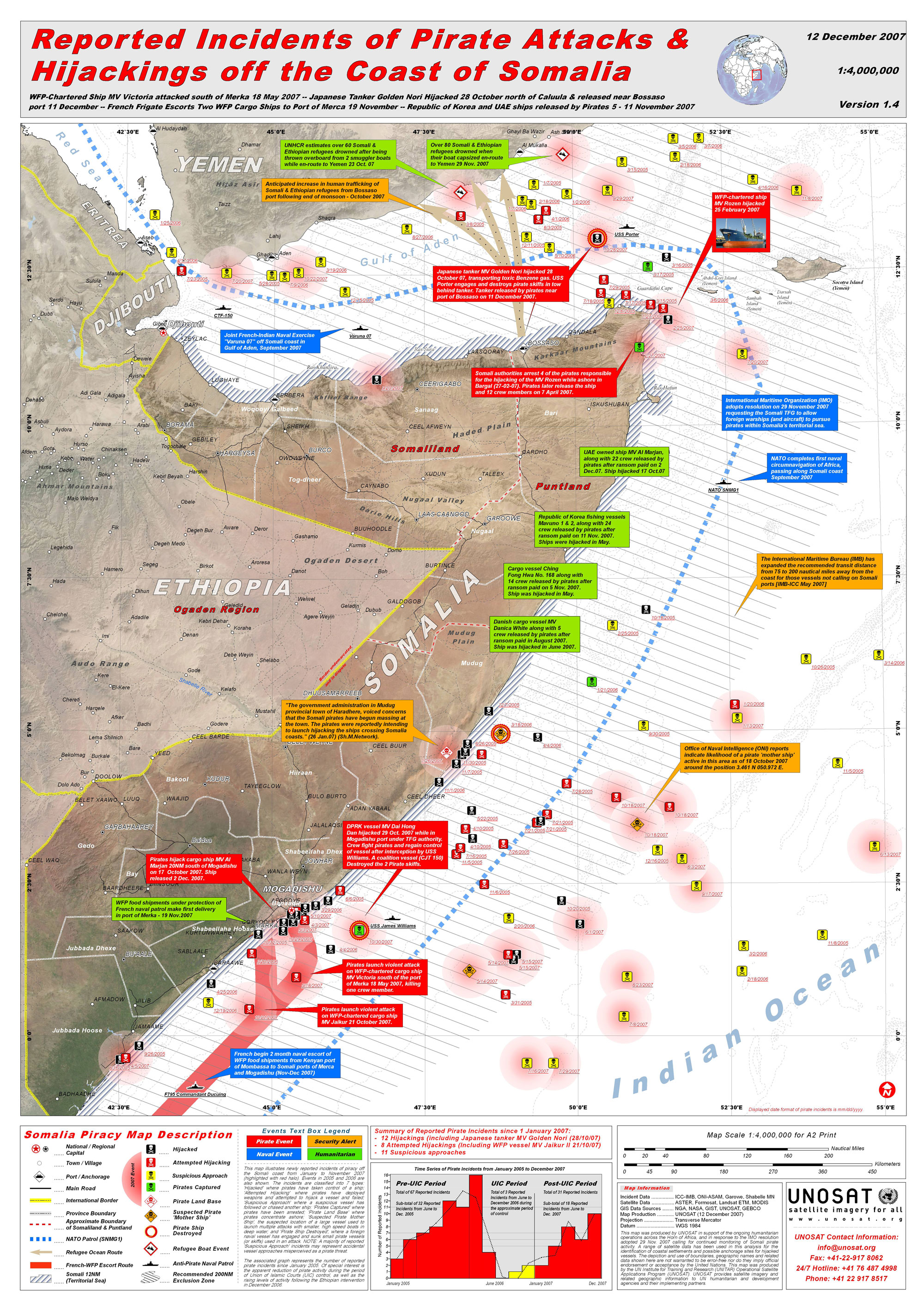
Black Flags and RPG's: Piracy continues to reveal massive problems, while the world misses the point.


The never ending attitude toward piracy off the Somali coast continues to astound me.  Somalia is a failed state with no government, no security, an antiquated economy undermined by climate change, no food supplies to feed its displaced population, and scares the hell out of aid agencies.  Yet we all talk about piracy as if that is the problem because piracy affects international trade.  Its obvious piracy is the consequence of desperate people living in a desperate situation, and if the global community cared about that situation, then we probably wouldn't have piracy.  If piracy continued to persist while the country developed, military intervention and security measures would make sense and probably have the desired outcome.

Everyday there is a constant deluge of absurd media generated about pirates.  Today CNN featured an article on ships containing a safe room to hide their crew while pirates run the show on deck.  They lock themselves in a bullet-proof room full of food and water and wait for help to arrive.  Or consider a personal favorite of mine, as BAE Systems develops a laser defense system to disorient would-be pirates from attacking with their AK-47s and RPGs.  There is also much fanfare over the development of a private military in Northern Somalia to police the waters and combat pirates.

In the meanwhile, the global economy loses anywhere between 7 and 12 BILLION dollars per year due to the impact and accumulated costs of piracy.   So yes, every one is losing money because some really poor men in rowboats are causing problems.

Perhaps one day, somebody, somewhere, will choose to invest a billion dollars into stabilizing the water supply or investing in the workforce of Somalia.  When more donors and nations realize the potential investment opportunity for such a geographically advantaged state,  perhaps they will consider investing in solutions rather than laser beams and naval fleets.  In that scenario, everybody wins, not just the pirates.

January 11, 2011

From the Council of Berlin to the Birth of South Sudan

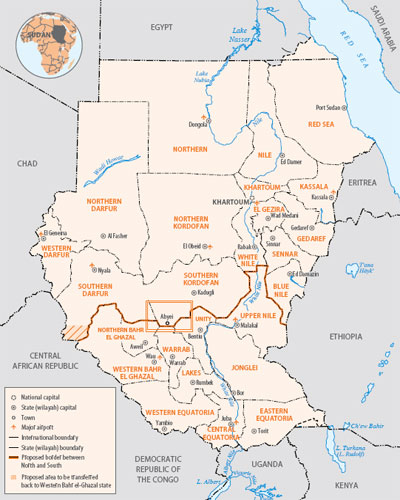
The whole world has been quite interested in Sudan this week, and rightfully so.  How often do we have the opportunity to potentially witness the birth of a new nation?  One thing I've noticed though when discussing the subject with my friends from neighboring countries is the idea that a unified Sudan is somehow ideologically better, although not necessarily reasonable.  I can't help but feel puzzled by this concept.

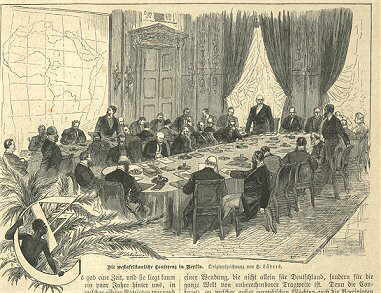
Perhaps I would feel the same if Sudan was composed of homogenous groups with shared language, culture, and ideology, but the truth is, that the composition of this modern state is more or less the whim of European colonialism.  In 1884-85, the European powers convened at the Council of Berlin to carve up Africa into separate territories, based upon the geographic locations and trade interests of European colonies.  Since African countries began to establish independence in the 1960s, these shapes have more or less remained the same.  Yet the arbitrary borders have done a great deal of damage to these countries, separating families, causing conflict over limited resources, and undermining regional stability.  


I know that the separation of north and south Sudan does not necessarily establish equality or peace. However, I do believe that it is a significant step toward equality and peace, as it presents the opportunity for the construction of African states founded on the citizens of those states, and not some distant power.

How to Build Something from Nothing

Trying to explain my day job to the American Geographical Society at Geo2050. November 2015. Everyday I have to give someone a 15 secon...