January 19, 2011
Looking for Water in All The Wrong Places as Somalia faces Drought and Famine
Today I noticed an IRIN post concerning the present drought in Somalia. Whereas people in Somali generally depended on water catchments for survival, most of these have dried up and now people are dying, as are their livestock. Livestock that survives is often too weak to sell. The most severe water shortages are in the southern regions, where pastoral livelihoods are a critical aspect of daily life. Somalia's Water and Land Information Management agency, SWALIM, has reported in a recent bulletin that crop production has also been aggressively damaged by the drought. Production of cash crops such as potatoes and citrus only continue in areas where farmers have access to river irrigation systems.
The draught is expected to last 2 or 3 months until the seasonal rains. Supposedly the draught is forcing people to migrate toward urban centers in search for water. Accordingly, "Somalis had begun trucking water, 'but it is not nearly enough,'... one water tanker, with 200 drums (each200 L) costs between $200 and $250." At that cost, 1 liter of water in Somalia is costing over 2 dollars per liter, on par with prices for bottled water in the United States, and it is certainly of much lower quality.
Reading this reminds me of some research I had done a bout a year ago, when it occurred to me one day, "How do people in Mogadishu manage to get water?" I had asked some friends who grew up there, and they explained that water was purchased from vendors who would transport it via donkey cart. Looking online, I happened to find an older article that some households have their own personal borehole while donkey cart delivery remains a common practice. Another common approach is for many families to combine their resources and purchase a larger volume of water that can be then distributed using a pump as needed. A family may spend an entire third of their income on obtaining water.
January 13, 2011
Somalis at the Moscow Airport Part IV
The other day I received an email about the Somalis who have been stranded in the Moscow airport for over a year. Having received permission from the author, I'm posting it below.
Hello!
My name is Orshi. I was changing planes at the Moscow airport on Monday, 01.10.2011
I met a girl there, who is a Somalian refugee, and spoke suprisingly good english. She told me there are 6 of them now - 2 women and 4 men. And they are hoping to get into the EU somewhere.
They applied for immigration, and waiting for papers. Also, they have a place to sleep, kind of, and regular food. Some international Union (sorry, forgot the name) gives them food once a week, every week, so she said they have enough. They've been there for 10 months, and not really any hope how to get out.
She told me they are trying to follow up on what is happening in Somalia through the net, and have no idea what happened with loved ones back there.
Also, their problem there is that they are bored to hell, i think. She told me she would like to study, she had good education, compared to others, because she has studied for 8 years. When I had to leave to catch mz fight she asked me for blank papers, or a notebook to have something to write on. I gave her a bunch of papers.
I don't know what could I do for them, but I really hope they won't be there for much longer.
Maybe you can help.
Orshi
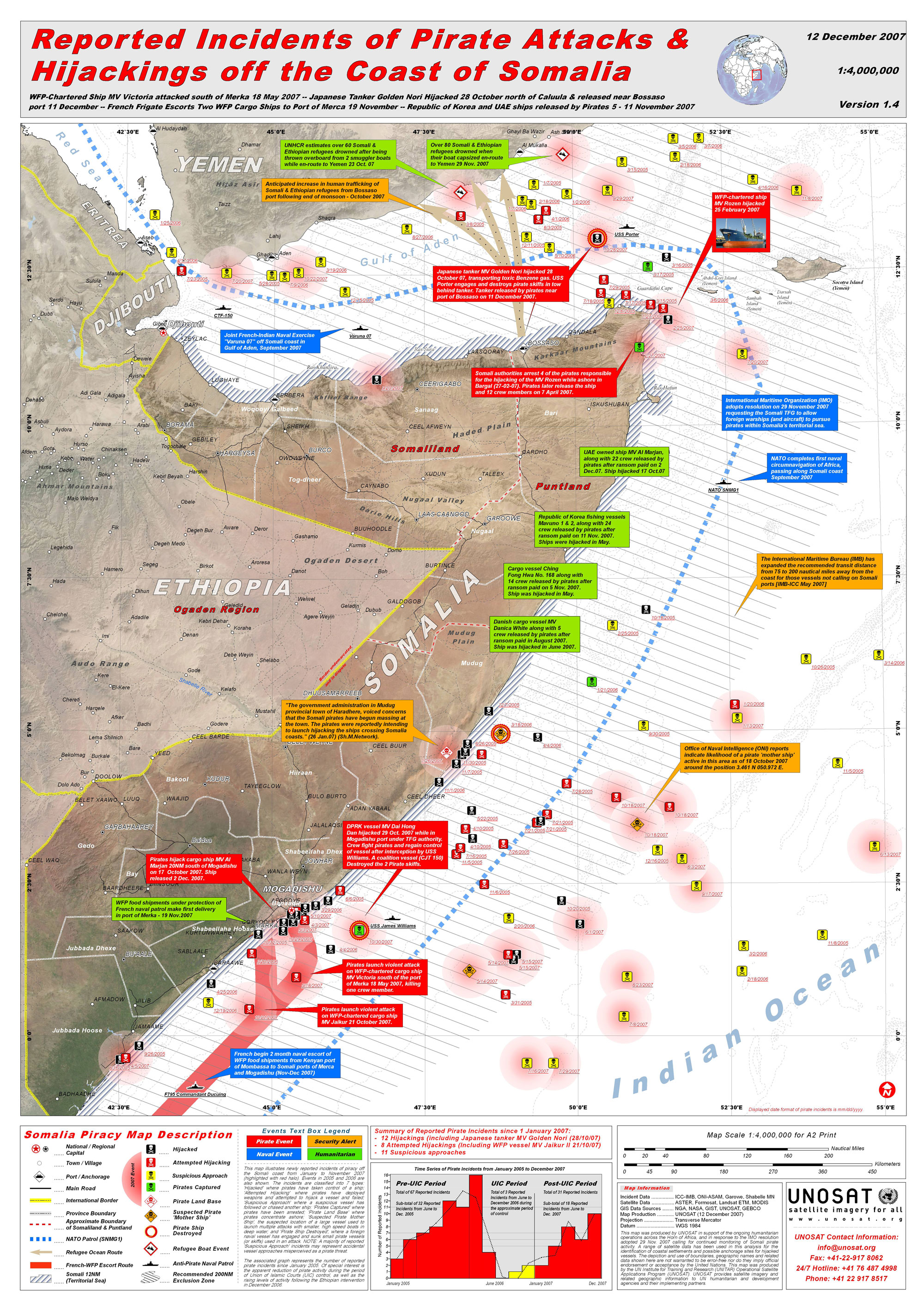
Black Flags and RPG's: Piracy continues to reveal massive problems, while the world misses the point.
The never ending attitude toward piracy off the Somali coast continues to astound me. Somalia is a failed state with no government, no security, an antiquated economy undermined by climate change, no food supplies to feed its displaced population, and scares the hell out of aid agencies. Yet we all talk about piracy as if that is the problem because piracy affects international trade. Its obvious piracy is the consequence of desperate people living in a desperate situation, and if the global community cared about that situation, then we probably wouldn't have piracy. If piracy continued to persist while the country developed, military intervention and security measures would make sense and probably have the desired outcome.
Everyday there is a constant deluge of absurd media generated about pirates. Today CNN featured an article on ships containing a safe room to hide their crew while pirates run the show on deck. They lock themselves in a bullet-proof room full of food and water and wait for help to arrive. Or consider a personal favorite of mine, as BAE Systems develops a laser defense system to disorient would-be pirates from attacking with their AK-47s and RPGs. There is also much fanfare over the development of a private military in Northern Somalia to police the waters and combat pirates.
In the meanwhile, the global economy loses anywhere between 7 and 12 BILLION dollars per year due to the impact and accumulated costs of piracy. So yes, every one is losing money because some really poor men in rowboats are causing problems.
Perhaps one day, somebody, somewhere, will choose to invest a billion dollars into stabilizing the water supply or investing in the workforce of Somalia. When more donors and nations realize the potential investment opportunity for such a geographically advantaged state, perhaps they will consider investing in solutions rather than laser beams and naval fleets. In that scenario, everybody wins, not just the pirates.
January 11, 2011
From the Council of Berlin to the Birth of South Sudan
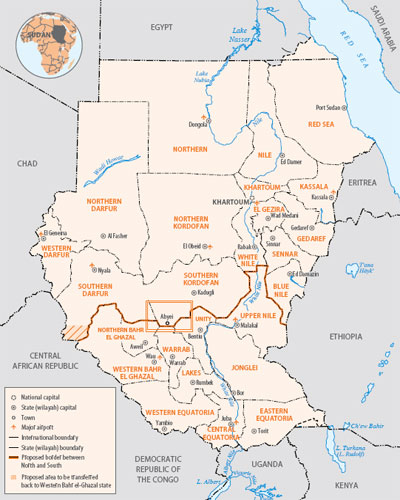
The whole world has been quite interested in Sudan this week, and rightfully so. How often do we have the opportunity to potentially witness the birth of a new nation? One thing I've noticed though when discussing the subject with my friends from neighboring countries is the idea that a unified Sudan is somehow ideologically better, although not necessarily reasonable. I can't help but feel puzzled by this concept.
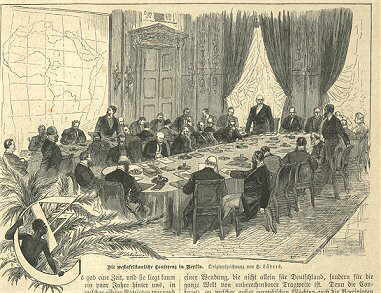
Perhaps I would feel the same if Sudan was composed of homogenous groups with shared language, culture, and ideology, but the truth is, that the composition of this modern state is more or less the whim of European colonialism. In 1884-85, the European powers convened at the Council of Berlin to carve up Africa into separate territories, based upon the geographic locations and trade interests of European colonies. Since African countries began to establish independence in the 1960s, these shapes have more or less remained the same. Yet the arbitrary borders have done a great deal of damage to these countries, separating families, causing conflict over limited resources, and undermining regional stability.
I know that the separation of north and south Sudan does not necessarily establish equality or peace. However, I do believe that it is a significant step toward equality and peace, as it presents the opportunity for the construction of African states founded on the citizens of those states, and not some distant power.
December 20, 2010
Part III, New Information on the Shermeyateva 16, Refugees in Moscow Airport
Contribution by Dani Grisby, Posted December 12, 2010
Good news! The Shermeyateva 16 is now down to 14. Two members have been resettled to Sweden.
Bad news: there are still 14 people stuck in the Moscow airport. We cannot stop writing Amnesty International, asking them to take this deserving group on as a focus case.
Here's an e-mail I recently received from Suheeb, one of the 16 stranded, which really expresses the severity of their situation.
If you've emailed on their behalf before, please do so, again. While we received a response from AI-USA (telling us to talk to the London office) we have yet to hear anything from London.
Send emails to: amnestyis@amnesty.org
"Hello!
My name is _____________, and I am writing to request that Amnesty International take up, as an urgent action, the case of 16 Somalis who, as victims of a smuggling scheme, have been stranded in the Sheremetyevo International Airport in Moscow for the past ten months. The Russian Federation is required under international law to assist these Somalis and allow them to access courts and other mechanisms that would facilitate their right to asylum. So far, the Russian Federation has failed to meet even the most basic of its international obligations in this case. We, as members of the international community, thus have an obligation to stand in solidarity with the Somalis and to make our voices be heard.
Thank you for taking this case into consideration.
Sincerely,
Your Name Here"
Write to the author of this post Dani Grisby, Policy Intern, at grigsby@miracoalition.org
Bad news: there are still 14 people stuck in the Moscow airport. We cannot stop writing Amnesty International, asking them to take this deserving group on as a focus case.
Here's an e-mail I recently received from Suheeb, one of the 16 stranded, which really expresses the severity of their situation.
Dear Dani,
We are doing good but are still in the airport. We were told we may get to go to Sweden but we're not sure.
Two of us have recently been sent to Sweden, they came to the airport before us. Now we are hoping insha Allah.
It will be very painful to be stateless for the new year. Especially as we have almost been here a year.
We don't know who to blame for this situation. But it's really bad when this huge planet cannot find room for you within any border, for no reason. We did not commit a crime, we are just seeking asylum. Maybe we can go to the planet mars, maybe life is better there.
Also, it's really hard for me to see what the two women who are with us have to go through. Most of us, we are men, But for the women to suffer, it really hurts me, too much. They have no privacy.
Any information you have from amnesty on our case?
Thank you,
Suheeb
If you've emailed on their behalf before, please do so, again. While we received a response from AI-USA (telling us to talk to the London office) we have yet to hear anything from London.
Send emails to: amnestyis@amnesty.org
"Hello!
My name is _____________, and I am writing to request that Amnesty International take up, as an urgent action, the case of 16 Somalis who, as victims of a smuggling scheme, have been stranded in the Sheremetyevo International Airport in Moscow for the past ten months. The Russian Federation is required under international law to assist these Somalis and allow them to access courts and other mechanisms that would facilitate their right to asylum. So far, the Russian Federation has failed to meet even the most basic of its international obligations in this case. We, as members of the international community, thus have an obligation to stand in solidarity with the Somalis and to make our voices be heard.
Thank you for taking this case into consideration.
Sincerely,
Your Name Here"
Write to the author of this post Dani Grisby, Policy Intern, at grigsby@miracoalition.org
Update on the Somalis in Moscow Airport
Shortly after posting my previous article, The Shermeyateva 16, Somali Refugees Stranded at Airport in Moscow, I was contacted by a woman who works in refugee assistance and who has worked to assist this group of Somalis for quite some time. She has given me permission to repost some of her previous writings on the subject.
Originally posted at MIRA, November 27, 2010
“Because [they] slipped through and fell in a crack. Nobody likes staying in a crack because they're nothing. Nobody likes to be stuck in a crack.”–Frank Dixon, character from DreamWorks’ 2004 film, ‘Terminal’
In 2004, theater-goers were regaled with the fictional tale of Viktor Navorski—a man from “Krakoshia”, an artificial Eastern European state—whose country became engulfed in war while he was in transit to the US. Upon his arrival at US customs, his passport was invalidated, no longer recognized by the US government. He was forced to remain in the airport until his status could be determined; he could not return to his war-tattered nation, nor could he, legally, enter the USA.
Comedy, friendship, love and intrigue are artistically woven into Navorski’s story as he navigates airport life over the course of the film. An ever-resilient Navorski is finally able to return “home.” This humorous and intriguing story is intended to be a piece of mainstream entertainment, enjoyed and then forgotten. But the situation is all too real.
Suheeb Mohammad and his travel companions have been living the fictional horror of Viktor Navorski for the past six months. These young men and women, desperate refugees from Somalia, paid $3,500 USD each to an individual who purported to have the means to assist them in seeking asylum via Moscow, Russia. They learned that they had been deceived upon arrival to Moscow’s Shermeyateva Dva airport, 45 minutes north of the city, in May of 2010. Russian customs officials discovered their falsified documents and their visas were summarily revoked. Unable to officially enter or exit the Russian Federation, their fates are left in the hands of charitable airport staff and non-governmental workers in Moscow’s unofficial humanitarian services sector. Food, water, and clothing needs are met through daily acts of charity. Their future remains unclear, and their hope dwindles.
In Suheeb’s own words:
“We feel stress and we need a big help. . .it’s taking a long time, you understand? Being in an airport for months? I cannot describe it. It hurts so much to be in this place but we don’t have a choice . . . we don’t feel safe and worry for the future. All we ask is when will we be out of here? Please, please try to help us.”
Suheeb and his travel companions (deemed the Shermeyateva 16) are not the first refugees to fall victim to Russia’s inadequate asylum system, forced to remain captive within its borders. Refugees and other forced migrants have sought refuge in or via Russia in great numbers since the fall of the Soviet Union. Seen as a veritable portal to the west, Moscow’s emerging economy and seeming openness (Soviet détente established ‘friendship universities,’ and recruited attendees from developing nations in sub-Saharan Africa and beyond) has captured the attention of the desperate asylum seekers from far abroad.
The first such noted case of airport detainees was documented in the Moscow Times in 1992. A group of over sixty refugees were held in a Moscow airport for months before finally being returned to their country of transit.
International conventions, to which Russia freely submits, set forward standard operating procedures to ensure the rights of forced migrants like Suheeb. The UN’s 1951 Refugee Convention recommends that governments “continue to receive refugees in their territories and that they act in concert in a true spirit of international cooperation in order that these refugees may find asylum and the possibility of resettlement.” What’s more, disallowing the Shermeyateva 16 access to the court system is, too, in direct violation of international standards set forward in the 1951 Convention.
This real-life drama, grimly mirroring fabricated situational comedy, unfolds day by unchanging day for these refugees. How it plays out depends very much on the tenacity of the cast of characters involved. Global advocates must step-up, forgive the pun, to the international stage. Decision makers, law enforcers, and politicians must unite in political prowess on behalf of the Shermeyateva 16.
In 2004, theater-goers were regaled with the fictional tale of Viktor Navorski—a man from “Krakoshia”, an artificial Eastern European state—whose country became engulfed in war while he was in transit to the US. Upon his arrival at US customs, his passport was invalidated, no longer recognized by the US government. He was forced to remain in the airport until his status could be determined; he could not return to his war-tattered nation, nor could he, legally, enter the USA.
Comedy, friendship, love and intrigue are artistically woven into Navorski’s story as he navigates airport life over the course of the film. An ever-resilient Navorski is finally able to return “home.” This humorous and intriguing story is intended to be a piece of mainstream entertainment, enjoyed and then forgotten. But the situation is all too real.
Suheeb Mohammad and his travel companions have been living the fictional horror of Viktor Navorski for the past six months. These young men and women, desperate refugees from Somalia, paid $3,500 USD each to an individual who purported to have the means to assist them in seeking asylum via Moscow, Russia. They learned that they had been deceived upon arrival to Moscow’s Shermeyateva Dva airport, 45 minutes north of the city, in May of 2010. Russian customs officials discovered their falsified documents and their visas were summarily revoked. Unable to officially enter or exit the Russian Federation, their fates are left in the hands of charitable airport staff and non-governmental workers in Moscow’s unofficial humanitarian services sector. Food, water, and clothing needs are met through daily acts of charity. Their future remains unclear, and their hope dwindles.
In Suheeb’s own words:
“We feel stress and we need a big help. . .it’s taking a long time, you understand? Being in an airport for months? I cannot describe it. It hurts so much to be in this place but we don’t have a choice . . . we don’t feel safe and worry for the future. All we ask is when will we be out of here? Please, please try to help us.”
Suheeb and his travel companions (deemed the Shermeyateva 16) are not the first refugees to fall victim to Russia’s inadequate asylum system, forced to remain captive within its borders. Refugees and other forced migrants have sought refuge in or via Russia in great numbers since the fall of the Soviet Union. Seen as a veritable portal to the west, Moscow’s emerging economy and seeming openness (Soviet détente established ‘friendship universities,’ and recruited attendees from developing nations in sub-Saharan Africa and beyond) has captured the attention of the desperate asylum seekers from far abroad.
The first such noted case of airport detainees was documented in the Moscow Times in 1992. A group of over sixty refugees were held in a Moscow airport for months before finally being returned to their country of transit.
International conventions, to which Russia freely submits, set forward standard operating procedures to ensure the rights of forced migrants like Suheeb. The UN’s 1951 Refugee Convention recommends that governments “continue to receive refugees in their territories and that they act in concert in a true spirit of international cooperation in order that these refugees may find asylum and the possibility of resettlement.” What’s more, disallowing the Shermeyateva 16 access to the court system is, too, in direct violation of international standards set forward in the 1951 Convention.
This real-life drama, grimly mirroring fabricated situational comedy, unfolds day by unchanging day for these refugees. How it plays out depends very much on the tenacity of the cast of characters involved. Global advocates must step-up, forgive the pun, to the international stage. Decision makers, law enforcers, and politicians must unite in political prowess on behalf of the Shermeyateva 16.
Join us in asking Amnesty International to host a worldwide letter writing campaign to grant these individuals equitable access to asylum proceedings. Write or call Amnesty International USA and offer your support of this campaign: (212) 807-8400 or submit the following email to: aimember@aiusa.org and please cc: ellenp@alum.dartmouth.org.
Dear Amnesty International USA:
Please take up the case of the Shermeyateva 16 as a special focus case. This group of 16 refugees have been unofficially detained in Moscow’s Shermeyateva Dva airport for the past six months without access to legal support of any official asylum proceedings. We urge you to allow us to unite and take action under Amnesty’s esteemed reputation, in order to reach a broader global support network and assist in ensuring these refugees are afforded their full, deserved human rights.
For more information, please contact Danielle J. Grigsby, Shermeyateva 16 Coordinator, at grigsbyd@bc.edu or 801-710-7148.
Respectfully,
Your Name Here
Dear Amnesty International USA:
Please take up the case of the Shermeyateva 16 as a special focus case. This group of 16 refugees have been unofficially detained in Moscow’s Shermeyateva Dva airport for the past six months without access to legal support of any official asylum proceedings. We urge you to allow us to unite and take action under Amnesty’s esteemed reputation, in order to reach a broader global support network and assist in ensuring these refugees are afforded their full, deserved human rights.
For more information, please contact Danielle J. Grigsby, Shermeyateva 16 Coordinator, at grigsbyd@bc.edu or 801-710-7148.
Respectfully,
Your Name Here
December 9, 2010
Does the Traditional Land Use System, Xeer, Have a Future in Somalia?
According to a UN-Habitat study in 2005, Xeer has 11 primary commandments:
- Land and any resources found on it are common assets of the clan or the primary lineage that permanently lives on it.
- Pasture is free for all pastoralists irrespective of clan affiliation in time of need.
- Pastoralists should preserve, and not burn, deserted thorn pens for animals.
- Generally nomads can not settle in the grazing valleys, however, in some regions pastoral hamlets may not be allowed to settle in the middle of grazing valleys.
- Individual pastoralists should not destroy shared pasture and fruit bearing trees
- Neither visiting grazers, nor local pastoralists, may establish commercial camps on grazing land.
- Private enclosures or farms on grazing lands are prohibited. No one is allowed to cut grass and transport it into another area.
- Visiting grazers must respect Xeer and maintain peaceful co-existence with the host communities.
- A committee of elders from the visiting group and the local community is empowered to resolve conflicts.
- Kinsmen should assist each other in hard times, particularly during long migrations.
- To reserve an old pen for private use, the head of the pastoralists group should clearly leave leave a mark in the front of the pen.
A quick review of these 11 tenants reveals the fluid nature of land use and its exchange between clans, sub-groups, and individuals. As Somalia hosts extreme environments and the economy is historically rooted in animal husbandry, this fluid exchange is essential for the survival. Nonetheless, these rules could quickly get messy in an urban environment where public space and private property blur the lines between social and personal use.
In an urban environment, how do the the concepts of Xeer take on new meaning? Can one interpret a vacant plot of land or an apartment available for use? Does an individual acquire the private right to a piece of property by means of long term occupation? It is likely that the role of Sharia Islamic law becomes an important element in negating these difficulties, yet as Sharia often has a focus on family and tribal rights, it is difficult to determine if Sharia can provide the appropriate tools to transgress private property disputes.
Although many of these issues have been explored and expanded upon in depth in cities of Somaliland and Puntland, it is less certain how these problems will be resolved in places such as Mogadishu and Kismayo in the future. I suppose if the nation were to be united under a Sharia based system, there would be a basic framework to construct new land use laws that are consistent with past systems. However if a new, secular constitution is in place, that may create a new problem as the importation of techniques abroad might appear too much like an act of colonialism.
Ultimately it seems that viable land use laws need to build upon the intrinsic, informal systems that have dominated the geography of Somalia for centuries. Yet as long as border disputes and a weak government prevail, there are limited means to update the antiquated systems to engage a global economy. In future blog posts I will continue to investigate the the role of Xeer, in particular in relation to Sharia and secular law, as tools for future stabilization and reconstruction efforts.
The Role of Land Use Laws in Architectural Planning and Design for Reconstruction, Refugee, and IDP Camps
When the earthquake immediately happened in Haiti, I recall having several conversations about the creation of IDP camps and popular criticisms regarding a slow reaction by aid agencies. Time and again, as natural disasters strike, displaced populations are forced to seek temporary shelter while various actors struggle to put the pieces beck together. A key, yet heavily under discussed element of this process, is the role of land use laws and ownership.
Land ownership is a messy situation in impoverished countries, as formal systems of documentation and ownership found in the wealthiest countries simply do not exist, or are incredibly corrupt and complicated. Economist Hernando de Soto even advocates that much of the world is trapped in poverty primarily because populations lack access to the articles of ownership and leasing of property. Without deeds, leases, or contacts to facilitate transactions of property, the greatest commodities are the least utilized. Without these mechanisms, land use and ownership laws vary by culture and economy, such as in Somalia where the traditional Xeer system is founded upon the interests of nomadic pastoralism. In much of Somalia, Xeer works alongside secular state law and Islamic Sharia law to form a loosely understood system of Somali Common Law. While it is a challenge for outsiders to penetrate these complex, informal systems, it is often just as difficult for residents to pursue the formal channels of land ownership in their on countries.
Given the range of land use laws that exist in a single site, it is no surprise that humanitarian action can be slow and difficult. In an emergency, the rights and regulations of land use and ownership are not suspended, but must be integrated in the recovery process. This of course does great disservice to the most vulnerable populations, who are left seeking safety along public transportation roots and government land. To complicate matters further in Haiti, many citizens to not hold land ownership but rent or sharecrop land from an often absent landlord via informal agreements that have been in place for several decades or longer.
If informal arrangements dominate the settlement of displaced persons in Haiti, how can designers, architects and planners advance the reconstruction of Port Au Prince and surrounding regions? Whereas the city organically developed by means of these loose arrangements, can a western system of design and planning facilitate the reconstruction? Clearly it is possible to introduce new housing and urbanism solutions, but then a new complication will arise, as it demands the finding and rightful compensation to existing land owners. Of course this process takes time, and under the constraints of a pending crisis time always appears to be the one resource that is never available.
December 1, 2010
Somalia's New Army already has a History
Today a story was released by the associated Press that a 1,000 man army is in development in Somalia's northern region of Puntland to fight against Piracy. It is funded by anonymous Muslim nations is operated by the private security organization Saracen International. This immediately brings to mind two points:
1. Saracen International? Seriously? Saracen was a an ancient Roman term used throughout the Crusades in reference to Arab and/or muslim populations. The name stuck around forever, one can even find it in Mark Twain's Pilgram's Progress as he travelled across the Middle East but it continued to be used in a negative fashion. Considering it carries negative, perhaps even racist connotations, I'm surprised that a mercenary group would name themselves as such.
2. According to Associated Press, Saracen International is the rebranding of the mercenary/private security organization Executive Outcomes. If you by chance have read the book Dogs of War, you are aware of the attempts by Simon Mann to seize and control distressed African nations. After he staged a coup in the Canary Islands, he later used South-African company Executive Outcomes to sieze territorial control in Angola in the early 90s. Executive Outcomes, and Mann's other venture Sandline International, faded out of the mercenary business sometime around 2000. However it looks like they're back in business.
In the meanwhile, unknown donor nations attempt to control the piracy problem on the coast, the primary conflict in Somalia continues to escalate and millions of people continue to search for safety. In the last 3 years a section of displaced peoples from Mogadishu have been establishing a new settlement known as the Afgooye corridor. Satelite photos have revealed an astonishing degree of settlement recently as the regional violence continues. I also embedded additional videos below from UNHCR on the Afgooye Corridor.
November 23, 2010
The Shermeyateva 16, Somali Refugees Stranded at Airport in Moscow
Have you ever seen the Tom Hanks movie about the man from Eastern Europe who is stuck in an airport when when his country implodes and invalidates his passport before reaching customs? That movie was based on the real life experience of an Iranian man who was stuck at a French airport due to his own idiocy. The man had acquired refugee status in Belgium, then got on a ferry to England and sent his legal document back to Belgium in the mail, thus leaving him stranded between borders with no legal clearance. Later he wrote a book about it, which I found shoved in the corner of guest house in India, and have wondered periodically about how the matter was resolved.
But these stories are more than fiction. Such things actually happen.
A few days ago I received an email that said the following:
Having read something about this sometime during the summer, I was disappointed to learn the situation is otherwise unchanged. Airports are a legal curiosity, as they present passengers with a 'legal fiction' of control between border points while remaining trans-national space. Yet I cannot wonder about the particular issues facing this group. Were they denied entry to Russia? Were they denied exit? Were they in transit to another destination but lacked transit visas? What happened? If anyone can tell me more about this, I'd like to hear about it. You can contact me here.
But these stories are more than fiction. Such things actually happen.
A few days ago I received an email that said the following:
This past weekend I was traveling in Russia and I encountered a group of 8 Somali refugees who told me they have been stranded in the Moscow airport for the past nine months. I spoke with two who have very good English. The group is safe, but they are sleeping on the airport floor surviving on instant soup and have not been able to leave the airport at all. I'm assuming this is the same group who Rachel encountered in June.I found your contact info on the forced migration list serve via a Google search and am following up to see if you have any additional information or ideas for how to support them. I have referred them to the Advocates for Human Rights, a Minnesota-based organization in the US, but am looking for all ideas for how to help them. The situation seems inhumane and I would like to do whatever I can to assist them in finding a permanent new home. A Russian airport staff person has donated a laptop to the group and they have internet access. Here is the email address that can be used to reach them [redacted].
Please let me know if you might be able to help this group, or suggest someone who can, or have any advice for the best way to raise the profile of their plight."
Having read something about this sometime during the summer, I was disappointed to learn the situation is otherwise unchanged. Airports are a legal curiosity, as they present passengers with a 'legal fiction' of control between border points while remaining trans-national space. Yet I cannot wonder about the particular issues facing this group. Were they denied entry to Russia? Were they denied exit? Were they in transit to another destination but lacked transit visas? What happened? If anyone can tell me more about this, I'd like to hear about it. You can contact me here.
November 19, 2010
The Seemingly Impossible is Possible
Today I am sharing Hans Rosling's presentation at TEDTalks, wherein he uses a wealth of statistical data to show how the world is changing - for the better. He begins this by presenting an excellent analysis of aggragated data, comparing the GDP of countries vs. their infant mortality rate over the last 100 years. The data reveals the discrepancies between economic growth and social development, for example, in 1957 the United States had same economy as contemporary Chile, yet only in 2002 does the quality of health with the United States reach the quality of health within Chile. As the presentation advances, he introduces the lessons learned from his long experience as a public health researcher and strategies toward mitigating the obstacles toward further advances. What I love most about this presentation is that he deconstructs the industrial/developing mindset and shows that many of the countries in the world we consider 'developing' have actually advanced more in the last 50 years than any other country in the world if one were to accurately consider the circumstances these countries were facing 50 years ago. Not only is the presentation insightful, but it is incredibly entertaining as well. Enjoy.
Subscribe to:
Posts (Atom)
How to Build Something from Nothing
Trying to explain my day job to the American Geographical Society at Geo2050. November 2015. Everyday I have to give someone a 15 secon...
-
New Construction Underway in Mogadishu, Somalia. Sutika Sipus 2012. I always intend to write at least twice a week, but lately the...
-
Smokestack chasing. Garden cities. Tactical Urbanism. New Urbanism. Creative cities. What do all these have in common? They all r...